VAT Relief allows a person who has a long-term illness or a permanent disability to buy eligible items without having to pay VAT therefore saving 20% on the normal VAT inclusive price.
Most of the products which can be purchased from Manage At Home are available for an eligible person to purchase without paying VAT on them. HM Revenue and Customs sets out the conditions when equipment for people with a long-term illness or a permanent disability might be eligible for VAT relief and how to claim exemption from paying VAT on these products.
On the My Basket page of this website, an online declaration form is provided if the basket contains a product that qualifies for VAT relief. Tick the box to state that you wish to claim VAT relief on the eligible product(s). If possible, the person making the claim should complete this form, but a family member, carer or medical professional may complete the form on the claimants behalf.
Choosing the right chair for an elderly person can make a real difference to everyday comfort, confidence and independence at home. A standard armchair may feel comfortable at first, but it may not always provide the right level of support when you are sitting down, standing up or trying to stay comfortable for longer periods.
Before looking at chair styles or features, it is important to consider how the new chair will fit into your daily life.
Choosing the chair by room or space
Where the chair will be used can affect the type of support, size and features needed. A chair for a living room may need to support longer periods of sitting, while a bedroom chair may be used more for dressing, resting or short seated tasks.
Living room
What to consider: Comfort, support and ease of standing are important, especially if the person spends long periods seated during the day.
Living room chairs are where most people typically spend most of their time, therefore you need something that is going to blend in with your existing furniture, that is comfortable, supportive, and modern. One such product is the Fitzroy chair.
If you are thinking more about longevity and are looking for a chair that will suit you today and if your needs change in the future, you may wish to think about other aspects such as pressure care and whether any other accessories such as adapted backrests will be needed in the future, in this case you may find that the Accora Configura Comfort may be the right fit for you.
Bedroom
What to consider: Check there is enough space around the chair for dressing, transfers, walking aids or carer support.
Bedroom chairs may be used only for short periods to assist you with dressing or other tasks. A chair with a supportive backrest, stable arms and a comfortable seat will be important to allow you to transfer on/off the chair and to provide a suitable rest period between tasks.
What to consider: Whether the chair will be exposed to heat, sunlight, or changing temperatures, and whether it is easy to move in and out of the space.
Conservatory chairs should be comfortable to sit in and relax in, so you can enjoy the scenery and wildlife. It is usually best to avoid leather materials in this room, as they can react poorly to light and heat. Therefore, fabric options such as the Three Pillow Dual Motor Fabric Riser Recliner may suit this room.
Shared or care setting
What to consider: Look for stable seating, easy-clean materials and enough room around the chair for safe support.
When you are considering an appropriate chair for a shared living or care setting it is important to consider aspects such as comfort, infection control, cleanliness and repositioning of the chair (if required). Chairs made with Dartex material feature a vapour-permeable fabric to improve cleanliness and facilitate cleaning between users or to help manage accidental spills. These chairs usually have wheeled castors, which help reposition the chair if you want to engage in different activities.
Mistakes to avoid when buying chairs for the elderly
1. Choosing a chair that is too low
This can make standing up more difficult and may mean the person needs more physical assistance than from an appropriate height chair.
2. Choosing a chair that is too soft
Soft seating can feel comfortable at first, but if the person sinks into the chair, it may be harder to reposition or stand.
3. Focusing on appearance before fit
A chair should suit the home, but it also needs to suit the person’s body, routine and level of mobility.
4. Not checking seat width
A seat that is too narrow may feel uncomfortable, while one that is too wide may not provide enough support.
5. Not checking seat depth
If the seat is too deep, the person may slide forward or struggle to sit back properly, which can cause additional pressure on their back and make standing up more difficult.
6. Forgetting about armrest support
Armrests should feel stable and supportive, especially if the person uses them to sit down or stand up.
7. Overlooking room space
The chair needs to fit the room, with enough space around it for standing, reclining, transfers or carer support.
8. Assuming a cushion will fix the problem
Cushions can help with comfort, but they should not be used to make up for a chair that is the wrong size or unsuitable.
Seat height, width and depth
The size of a chair can affect how comfortable and supportive it feels. Even small differences in height, width and depth can change how easy it is to sit, stand and maintain a comfortable position.
A chair that is too low may make standing up more difficult, especially if the person has reduced leg strength or joint stiffness. A chair that is too high may leave the feet unsupported, which can feel unstable or uncomfortable.
Seat width is also important. The person should have enough space to sit comfortably, without the chair feeling too tight or too wide. If the seat is too wide, they may not feel properly supported by the armrests or backrest.
Seat depth affects how well the back is supported. If the seat is too deep, the person may slide forward or sit away from the backrest. If it is too shallow, the chair may not provide enough support through the thighs.
Area
Description
How to measure
Seat height
Helps make sitting down and standing up easier and more controlled.
The best way to measure the height of the seat for your chair is to sit with your feet flat on the floor, measure from the ground to the crease in the back of your knee. This measurement is the lowest that you will need your seat height to be.
Seat width
Supports comfort without feeling too tight or too wide.
The best way to measure your seat width is to sit down in a comfortable chair, use a tape measure to gauge the space between your hips which are usually the widest points. Try not to measure around your stomach as this will make the seat measurement too wide. This will give you your physical width, it is usually best to allow an additional inch to this measurement to allow some comfort space.
Seat depth
Allows the back to rest against the chair without pressure behind the knees.
The best way to measure your ideal seat depth, is to measure from the back of your coccyx (tail bone) along the length of your thigh to the crease in the back of your knee. This will give you your ideal seat depth measurement.
Armrest height
Helps support the arms and may assist with standing.
The best way to measure your ideal armrest height is to sit in a chair with your shoulders relaxed and elbows slightly bent, take a measurement from the top of the seat to your elbow.
Taking measurements before buying can help avoid choosing a chair that looks suitable but does not feel right in everyday use.
Support for sitting down and standing up
For many people, the most difficult part of using a chair is not sitting in it, but getting in and out of it.
A supportive chair should allow the person to sit down in a controlled way and stand up without excessive effort. Firm armrests can help by giving the person something stable to push from. A supportive seat can also make a difference, as very soft chairs may allow the person to sink too far down, making standing harder.
Seat height is especially important here. If the chair is too low, the person may need to rock forward or rely more heavily on their knees, hips or another person for support.
Where standing from a standard chair has become difficult, a higher seat chair or riser recliner may be worth considering. The best option will depend on the person’s mobility, confidence and how much assistance they need.
Comfort for longer periods of sitting
Comfort is important, but the softest chair is not always the most suitable choice. A chair that feels very soft at first may not provide enough support over time, especially if the person sits for long periods.
A supportive chair should help the person stay comfortably upright, with their back supported and their feet resting in a stable position. Armrests should feel comfortable to use, and the seat should feel firm enough to support movement without feeling hard or uncomfortable.
Small additions, such as a suitable cushion or foot support, may help in some cases. However, they should not be used to compensate for a chair that is the wrong size or unsuitable for the person’s needs.
Posture, pressure and extra support
A chair should help the person sit in a stable and comfortable position. Signs that a chair may not be providing enough support include sliding forward, leaning to one side, sitting with the feet unsupported, or struggling to remain upright.
For people who sit for long periods, comfort and pressure management also become more important. If someone cannot easily change position, has fragile skin, has existing pressure concerns, or is spending much of the day seated, it is best to seek advice from an Occupational Therapist or healthcare professional.
Choosing between different seating options
There is no single chair that suits everyone. The right option depends on the person’s mobility, comfort needs, home environment and how the chair will be used.
Please note: This table can help narrow the choice, but it should not replace professional advice where needs are more complex.
Seating need
What may help
General comfort at home
A supportive chair with suitable height, firm arms and good back support.
Difficulty standing from a chair
A higher seat chair or riser recliner may make sitting and standing more manageable.
Longer periods of sitting
Supportive cushioning, good positioning and pressure care advice may be needed.
Tired or unsupported legs
A suitable footrest, leg rest or chair with leg elevation may help comfort.
Leaning, sliding or poor posture
Specialist seating advice may be needed before choosing a chair.
Shared or care setting use
Stable design, easy-clean materials and good access around the chair are important.
Features to check before buying
Stable frame: The chair should not feel unsteady when the person sits, stands or pushes from the arms.
Firm armrests: Armrests should feel supportive and secure, especially if they will be used when standing up or sitting down.
Supportive backrest: The backrest should help the person sit comfortably without slouching or leaning.
Suitable seat height: The seat should not feel too low or too high for the person using it.
Seat depth: The person should be able to sit back comfortably without pressure behind the knees.
Seat firmness: A very soft seat may feel comfortable at first but can make standing or repositioning harder.
Simple controls: For powered chairs, the handset should be easy to use and kept within reach.
Plug socket access: Powered chairs need to be placed near a suitable socket.
Weight capacity: Always check the chair is suitable for the person using it.
Fabric and cleaning: Consider whether the material is comfortable, durable and easy to keep clean.
Room access: Check the chair will fit through doorways and into the chosen room.
Space around the chair: Make sure there is enough room for sitting, standing, reclining or carer support if needed.
When to ask for professional advice
Professional advice is recommended if the person has more complex seating needs or if you are unsure what level of support is required.
An Occupational Therapist or healthcare professional can help assess posture, pressure risk, transfers and the home environment. They can also advise whether a standard supportive chair, riser recliner, cushion, foot support or specialist seating option may be more appropriate.
At Manage At Home, we have a team of expert Occupational Therapist available for private assessments to support you with any seating or other difficulties you are experiencing.
At Manage At Home, we offer a range of seating aids designed to support comfort, independence and daily living at home. This includes seating solutions for relaxation, sitting and standing, longer periods of sitting and additional support around the home.
Choosing the chair by room or space
Where the chair will be used can affect the type of support, size and features needed. A chair for a living room may need to support longer periods of sitting, while a bedroom chair may be used more for dressing, resting or short seated tasks.
Living room
What to consider: Comfort, support and ease of standing are important, especially if the person spends long periods seated during the day.
Living room chairs are where most people typically spend most of their time, therefore you need something that is going to blend in with your existing furniture, that is comfortable, supportive, and modern. One such product is the Fitzroy chair.
If you are thinking more about longevity and are looking for a chair that will suit you today and if your needs change in the future, you may wish to think about other aspects such as pressure care and whether any other accessories such as adapted backrests will be needed in the future, in this case you may find that the Accora Configura Comfort may be the right fit for you.
Bedroom
What to consider: Check there is enough space around the chair for dressing, transfers, walking aids or carer support.
Bedroom chairs may be used only for short periods to assist you with dressing or other tasks. A chair with a supportive backrest, stable arms and a comfortable seat will be important to allow you to transfer on/off the chair and to provide a suitable rest period between tasks.
What to consider: Whether the chair will be exposed to heat, sunlight, or changing temperatures, and whether it is easy to move in and out of the space.
Conservatory chairs should be comfortable to sit in and relax in, so you can enjoy the scenery and wildlife. It is usually best to avoid leather materials in this room, as they can react poorly to light and heat. Therefore, fabric options such as the Three Pillow Dual Motor Fabric Riser Recliner may suit this room.
Shared or care setting
What to consider: Look for stable seating, easy-clean materials and enough room around the chair for safe support.
When you are considering an appropriate chair for a shared living or care setting it is important to consider aspects such as comfort, infection control, cleanliness and repositioning of the chair (if required). Chairs made with Dartex material feature a vapour-permeable fabric to improve cleanliness and facilitate cleaning between users or to help manage accidental spills. These chairs usually have wheeled castors, which help reposition the chair if you want to engage in different activities.
The Orla Rise and Recline Chair offers ergonomic comfort, powered mobility support, and modern style. Its dual-motor system provides independent backrest and footrest adjustment to reduce pressure and improve circulation. Featuring a 360° swivel base, rise-assist function, durable steel frame, and fabric or leather finishes, it promotes comfort, independence, and everyday wellbeing.
Powered Rise Assist helps you stand safely and comfortably
Mistakes to avoid when buying chairs for the elderly
1. Choosing a chair that is too low
This can make standing up more difficult and may mean the person needs more physical assistance than from an appropriate height chair.
2. Choosing a chair that is too soft
Soft seating can feel comfortable at first, but if the person sinks into the chair, it may be harder to reposition or stand.
3. Focusing on appearance before fit
A chair should suit the home, but it also needs to suit the person’s body, routine and level of mobility.
4. Not checking seat width
A seat that is too narrow may feel uncomfortable, while one that is too wide may not provide enough support.
5. Not checking seat depth
If the seat is too deep, the person may slide forward or struggle to sit back properly, which can cause additional pressure on their back and make standing up more difficult.
6. Forgetting about armrest support
Armrests should feel stable and supportive, especially if the person uses them to sit down or stand up.
7. Overlooking room space
The chair needs to fit the room, with enough space around it for standing, reclining, transfers or carer support.
8. Assuming a cushion will fix the problem
Cushions can help with comfort, but they should not be used to make up for a chair that is the wrong size or unsuitable.
Seat height, width and depth
The size of a chair can affect how comfortable and supportive it feels. Even small differences in height, width and depth can change how easy it is to sit, stand and maintain a comfortable position.
A chair that is too low may make standing up more difficult, especially if the person has reduced leg strength or joint stiffness. A chair that is too high may leave the feet unsupported, which can feel unstable or uncomfortable.
Seat width is also important. The person should have enough space to sit comfortably, without the chair feeling too tight or too wide. If the seat is too wide, they may not feel properly supported by the armrests or backrest.
Seat depth affects how well the back is supported. If the seat is too deep, the person may slide forward or sit away from the backrest. If it is too shallow, the chair may not provide enough support through the thighs.
Area
Description
How to measure
Seat height
Helps make sitting down and standing up easier and more controlled.
The best way to measure the height of the seat for your chair is to sit with your feet flat on the floor, measure from the ground to the crease in the back of your knee. This measurement is the lowest that you will need your seat height to be.
Seat width
Supports comfort without feeling too tight or too wide.
The best way to measure your seat width is to sit down in a comfortable chair, use a tape measure to gauge the space between your hips which are usually the widest points. Try not to measure around your stomach as this will make the seat measurement too wide. This will give you your physical width, it is usually best to allow an additional inch to this measurement to allow some comfort space.
Seat depth
Allows the back to rest against the chair without pressure behind the knees.
The best way to measure your ideal seat depth, is to measure from the back of your coccyx (tail bone) along the length of your thigh to the crease in the back of your knee. This will give you your ideal seat depth measurement.
Armrest height
Helps support the arms and may assist with standing.
The best way to measure your ideal armrest height is to sit in a chair with your shoulders relaxed and elbows slightly bent, take a measurement from the top of the seat to your elbow.
Taking measurements before buying can help avoid choosing a chair that looks suitable but does not feel right in everyday use.
The Accora Configura Chair is a dual motor tilt-in-space chair that features pressure reducing fabric reduced shear recliner integrated depth adjustment and castors for easy manoeuvrability. Available in three different sizes.
For many people, the most difficult part of using a chair is not sitting in it, but getting in and out of it.
A supportive chair should allow the person to sit down in a controlled way and stand up without excessive effort. Firm armrests can help by giving the person something stable to push from. A supportive seat can also make a difference, as very soft chairs may allow the person to sink too far down, making standing harder.
Seat height is especially important here. If the chair is too low, the person may need to rock forward or rely more heavily on their knees, hips or another person for support.
Where standing from a standard chair has become difficult, a higher seat chair or riser recliner may be worth considering. The best option will depend on the person’s mobility, confidence and how much assistance they need.
Comfort for longer periods of sitting
Comfort is important, but the softest chair is not always the most suitable choice. A chair that feels very soft at first may not provide enough support over time, especially if the person sits for long periods.
A supportive chair should help the person stay comfortably upright, with their back supported and their feet resting in a stable position. Armrests should feel comfortable to use, and the seat should feel firm enough to support movement without feeling hard or uncomfortable.
Small additions, such as a suitable cushion or foot support, may help in some cases. However, they should not be used to compensate for a chair that is the wrong size or unsuitable for the person’s needs.
This traditional Restwell Queen Anne Fireside Chair offers excellent head neck and lumbar support. Features a fully sprung platform luxury tapered seat cushion and an inviting back cushion.
A chair should help the person sit in a stable and comfortable position. Signs that a chair may not be providing enough support include sliding forward, leaning to one side, sitting with the feet unsupported, or struggling to remain upright.
For people who sit for long periods, comfort and pressure management also become more important. If someone cannot easily change position, has fragile skin, has existing pressure concerns, or is spending much of the day seated, it is best to seek advice from an Occupational Therapist or healthcare professional.
Choosing between different seating options
There is no single chair that suits everyone. The right option depends on the person’s mobility, comfort needs, home environment and how the chair will be used.
Please note: This table can help narrow the choice, but it should not replace professional advice where needs are more complex.
Seating need
What may help
General comfort at home
A supportive chair with suitable height, firm arms and good back support.
Difficulty standing from a chair
A higher seat chair or riser recliner may make sitting and standing more manageable.
Longer periods of sitting
Supportive cushioning, good positioning and pressure care advice may be needed.
Tired or unsupported legs
A suitable footrest, leg rest or chair with leg elevation may help comfort.
Leaning, sliding or poor posture
Specialist seating advice may be needed before choosing a chair.
Shared or care setting use
Stable design, easy-clean materials and good access around the chair are important.
Features to check before buying
Stable frame: The chair should not feel unsteady when the person sits, stands or pushes from the arms.
Firm armrests: Armrests should feel supportive and secure, especially if they will be used when standing up or sitting down.
Supportive backrest: The backrest should help the person sit comfortably without slouching or leaning.
Suitable seat height: The seat should not feel too low or too high for the person using it.
Seat depth: The person should be able to sit back comfortably without pressure behind the knees.
Seat firmness: A very soft seat may feel comfortable at first but can make standing or repositioning harder.
Simple controls: For powered chairs, the handset should be easy to use and kept within reach.
Plug socket access: Powered chairs need to be placed near a suitable socket.
Weight capacity: Always check the chair is suitable for the person using it.
Fabric and cleaning: Consider whether the material is comfortable, durable and easy to keep clean.
Room access: Check the chair will fit through doorways and into the chosen room.
Space around the chair: Make sure there is enough room for sitting, standing, reclining or carer support if needed.
Professional advice is recommended if the person has more complex seating needs or if you are unsure what level of support is required.
An Occupational Therapist or healthcare professional can help assess posture, pressure risk, transfers and the home environment. They can also advise whether a standard supportive chair, riser recliner, cushion, foot support or specialist seating option may be more appropriate.
At Manage At Home, we have a team of expert Occupational Therapist available for private assessments to support you with any seating or other difficulties you are experiencing.
At Manage At Home, we offer a range of seats and seating aids designed to support comfort, independence and daily living at home. This includes seating solutions for relaxation, sitting and standing, longer periods of sitting and additional support around the home.
The Accora Configura Chair is a dual motor tilt-in-space chair that features pressure reducing fabric reduced shear recliner integrated depth adjustment and castors for easy manoeuvrability. Available in three different sizes.
This traditional Restwell Queen Anne Fireside Chair offers excellent head neck and lumbar support. Features a fully sprung platform luxury tapered seat cushion and an inviting back cushion.
The Three Pillow Fabric by Drive DeVilbiss is an affordable modern design dual motor riser recliner chair featuring a stylish and supportive waterfall back.
The attractive modern Lars Leather Dual Motor Riser Recliner Chair features a distinct lift rest and recline action offering excellent full snooze and comfort positions.
Leg rest and backrest can be operated independently
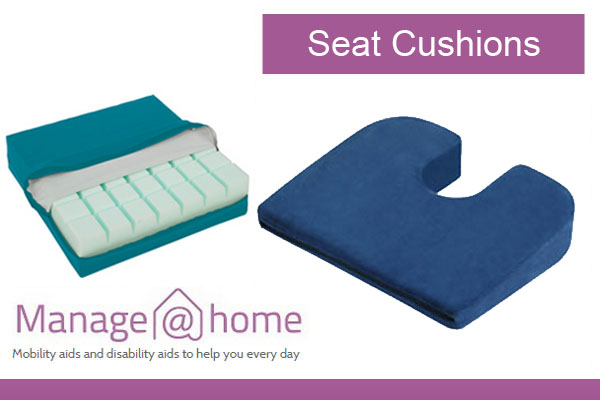
The majority of seat cushions from Manage At Home will fit most car seats, home or office chairs. It is always best to take the measurements of your chair and the seat cushion to ensure they are the relevant size.
Subscribe to our email newsletter to receive the latest news, advice and Manage At Home discount codes
By signing up by email, you agree to receive personalised emails and ads based on your Manage At Home website visits and browsing history. You can change your preferences or unsubscribe anytime. View our Privacy policy for more information or to unsubscribe.

















Comments